
Debt & Credit
Borrowing to invest multiplies the outcome in both directions
Using borrowed money to buy assets magnifies gains and losses equally. The asymmetry is in what happens when it goes wrong.
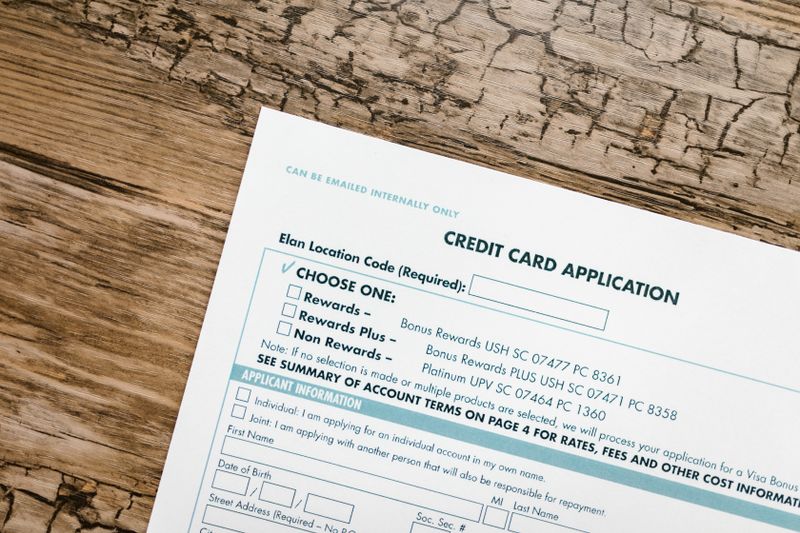
There is a settled way of talking about borrowing to invest. It is worth asking how much of it survives contact with the detail.
The argument in brief
- The loan payment continues regardless of what the investment does.
- A fall in value can force a sale at the worst possible moment.
- The return has to exceed the borrowing cost before anything is gained.
The arithmetic of leverage
Buying an asset partly with borrowed money means any change in its value applies to the whole holding while you funded only part of it. A modest gain on the asset becomes a larger gain on the money you actually committed, which is the entire attraction.
The identical mechanism applies to a fall, so a modest decline becomes a large loss on your own contribution. This is not a probabilistic claim but an arithmetic one, and it holds regardless of what the asset is. Leverage does not change the expected outcome of an investment; it changes the size of every possible outcome including the bad ones.
The cost that runs regardless
A loan taken to invest carries a payment schedule that continues whether the investment rises, falls or produces no income at all. The return therefore has to exceed the borrowing cost before any benefit exists, which raises the bar considerably. Where the borrowing rate is variable, that bar can rise during the holding period without any decision on your part.
Income-producing assets partially cover the payment, which is why leverage is more common with property than with growth assets. Where the asset produces no income, the payments must come from elsewhere, which turns the position into a cashflow commitment.
Forced selling
Some arrangements allow the lender to demand additional funds or to sell the assets if their value falls below a threshold. That converts a temporary fall into a permanent loss, because the sale happens at the low point rather than at a time you chose. Even without such a clause, a borrower under pressure often sells in a falling market simply to stop the payments.
Practically, this is the specific mechanism by which leverage turns volatility into ruin, and it operates independently of whether the original view was correct. An investment thesis that would have been right eventually is of no help to someone who was sold out before eventually arrived.
Where it appears without being noticed
Buying a home with a mortgage is a leveraged asset purchase, and it is by far the most common form of the arrangement. Some investment products embed borrowing internally, so the holder is leveraged without having taken out any loan themselves. Certain trading accounts extend credit automatically, which means a position can exceed the cash deposited without a deliberate decision.
Products described as offering enhanced or multiplied exposure are leveraged by construction, and the multiplication applies to falls.
Reading whether an investment borrows internally is a basic check and is disclosed in the documentation.
Who bears the risk
The lender is generally protected by security, by the payment obligation, or by the right to close the position. The borrower carries the residual risk, which is the portion that varies most and can exceed the amount originally committed in some structures. Where liability can exceed the sum invested, that fact is disclosed, and it is the single most important line in the documentation.
Practically, regulators in many jurisdictions restrict how such products are sold to individuals, precisely because the risk is poorly understood. Any arrangement where losses can exceed the amount put in is a fundamentally different proposition from an ordinary investment.
Before considering anything of this kind
The relevant questions are what happens if the asset falls by a large amount, and whether you could meet the payments if income stopped. If either answer involves selling in a hurry, the position is larger than the circumstances support. Borrowing to invest is a regulated area in most countries, and suitability rules exist because the risks are genuinely severe.
Over a full year, anyone contemplating it should take regulated advice from a qualified professional in their own jurisdiction first. Nothing here is a recommendation, and this article describes a mechanism rather than an opportunity.
The takeaway
Leverage multiplies every outcome and leaves the payment schedule untouched. The question is what happens to you in the worst case, not the best.
The decision is rarely about picking the best option — it is about avoiding the expensive one.
Questions readers ask
Is a mortgage borrowing to invest?
Mechanically it is a leveraged asset purchase, which is why house price movements have such a large effect on owners' equity. The difference is that the asset also provides somewhere to live.
Can I lose more than I put in?
In some structures, yes, and that fact is disclosed in the documentation. It is the most important characteristic to establish before any leveraged position.


