
Housing
A deposit is saved in one market and spent in another
Saving for a home means running against a moving target. Whether you gain ground depends on two rates at once.
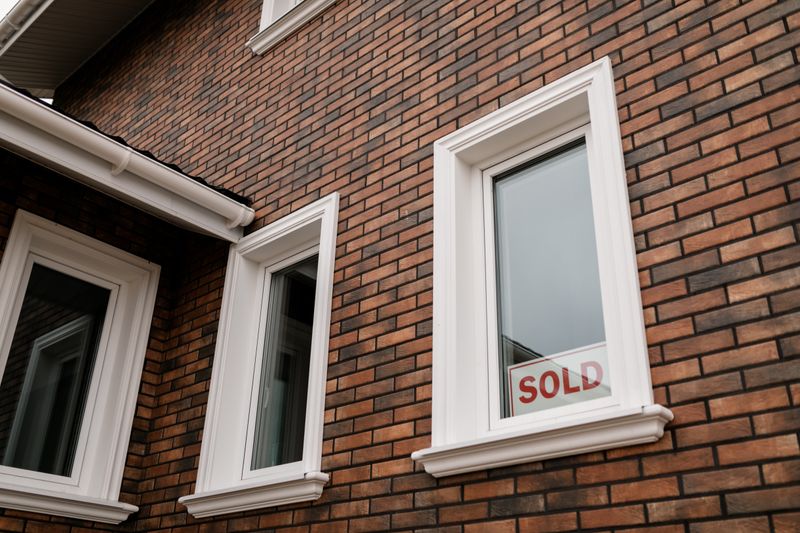
What follows is an argument about saving a housing deposit, and about where the received version of it stops being true.
The argument in brief
- The required deposit rises with prices while you are saving.
- A percentage target moves; a fixed amount does not.
- Saving rate usually matters more than the return on the savings.
The moving target
A deposit expressed as a percentage of the purchase price rises whenever prices rise, so the goal moves while you save towards it. That means the saver is running two races at once: accumulating money and keeping pace with the market.
Where prices are rising faster than the deposit is growing, the gap widens despite the balance increasing every month. Where prices are flat or falling, the same saving effort closes the gap much faster, which is why the experience varies so much between periods. None of this is within the saver's control, which is an uncomfortable but important thing to acknowledge early.
Why the target is a percentage
Lenders price mortgages according to the proportion of the property being borrowed, so the deposit determines the rate available. Those proportions are usually banded, meaning the rate improves in steps rather than smoothly as the deposit grows. A deposit just below a band boundary is therefore worth much less than one just above it, which is a useful thing to know while saving.
The specific bands and the size of the rate differences vary by market and change over time. Establishing where the nearest boundary sits gives the saving effort a concrete and meaningful target.
Saving rate against return
Over the few years most deposits take to accumulate, the amount saved each month dominates the return earned on the balance. A modest difference in interest applied to a partially built balance produces a small sum relative to the contributions. That is why the horizon matters: money needed within a few years is generally kept in cash despite the erosion from rising prices.
Taking market risk with a deposit means accepting that a fall could arrive in the same year the purchase was planned. The trade-off is between certainty of the amount and the possibility of keeping pace with prices, and neither option removes the problem.
The cash needed beyond the deposit
A purchase requires more than the deposit, including transaction taxes, legal costs, survey fees and moving expenses. Those costs are largely proportional to the price in some jurisdictions and fixed in others, so the total varies considerably.
For most households, furnishing and immediate repairs typically follow completion, and households frequently arrive with nothing left for them. Building the target from the deposit plus every associated cost gives a figure that will not surprise you at the end.
The specific taxes and charges differ so much between countries that only local figures are useful.
Help schemes and family assistance
Many countries operate schemes intended to assist first-time buyers, through savings incentives, guarantees or shared ownership structures. These change frequently, carry eligibility conditions, and sometimes constrain what can be bought or when it can be sold. Family assistance is common and takes several forms, including gifts, loans and guarantees, each with different consequences.
The arithmetic is straightforward: lenders require the source of any deposit to be evidenced, and gifts usually need documentation confirming they are not repayable. Because these arrangements have tax and legal implications, they are worth checking with a qualified professional locally.
Assume any product feature can be withdrawn at renewal.
Keeping the plan honest
Recalculating the target annually against actual prices in the area of interest prevents the plan drifting from reality. If the gap is widening despite consistent saving, the realistic responses are a different area, a different property type or a longer timescale. Discovering that early is far better than discovering it after several years of saving towards a number that was never reachable.
It is also worth confirming what a lender would actually advance, since that determines how much deposit is required. This is general information about how deposits work and not advice about buying property or about any scheme.
The takeaway
Set the target as a deposit band plus every transaction cost, then recheck it annually against real prices where you actually want to live.
The decision is rarely about picking the best option — it is about avoiding the expensive one.
Questions readers ask
Should I invest my house deposit?
Money needed within a few years is usually kept in cash, because a fall could coincide with the purchase. The trade-off is that cash may not keep pace with prices.
How much do I need beyond the deposit?
Transaction taxes, legal fees, surveys, moving and immediate repairs all follow. The amounts differ enormously by country, so build the target from local figures.


