
Investing
A fall of half needs a gain of double to get back
Percentage losses and percentage gains are not symmetrical, and the asymmetry gets worse the larger the fall.
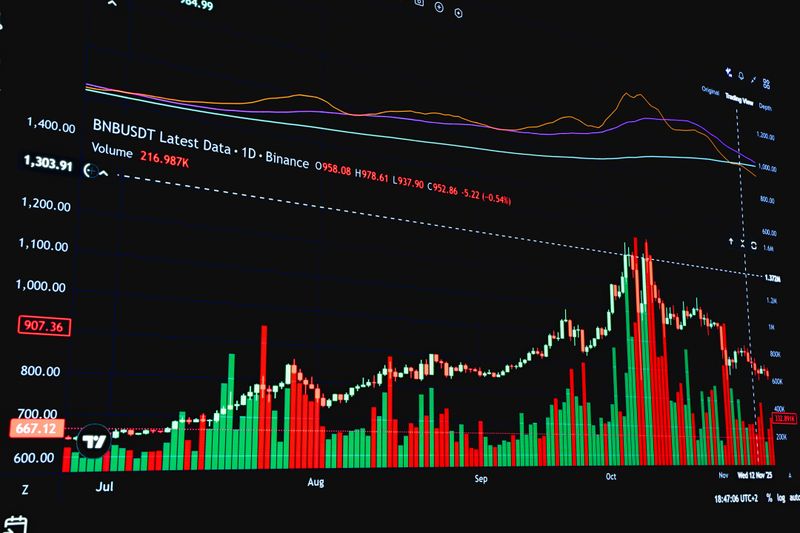
Everything here earned its place by changing an outcome. Nothing about the arithmetic of losses is included to round the number up.
What matters most
- A 50 per cent fall requires a 100 per cent gain to recover.
- The required recovery grows disproportionately as losses deepen.
- Avoiding large falls matters more arithmetically than capturing large gains.
The asymmetry, stated plainly
Lose ten per cent and you need roughly eleven per cent to get back; lose fifty and you need one hundred. The reason is that the loss is calculated on the original balance and the recovery on the reduced one.
Because the base shrinks, each additional unit of loss demands disproportionately more to undo. A ninety per cent fall requires a nine-hundred per cent gain, which is why very large losses are effectively permanent.
What it implies about risk taking
Strategies that produce occasional very large losses need extraordinary gains elsewhere to compensate, which is a demanding requirement. This is the arithmetic behind the general preference for avoiding catastrophic outcomes over maximising average ones.
It also explains why leverage is dangerous in a way that its expected return calculation conceals. A borrowed position that falls far enough is closed out, converting a temporary loss into a realised one with no recovery path.
The same arithmetic makes averages misleading
A sequence of returns of plus fifty and minus fifty has an arithmetic average of zero and leaves you down a quarter. The measure that reflects what actually happened to a balance is the compound or geometric return, which is always lower when returns vary. The greater the variation, the larger the gap between the average return quoted and the growth actually experienced.
This is why comparing investments on average annual return without reference to variability is not a fair comparison.
Why this argues against selling in a fall
A paper loss recovers if the holding recovers; a realised loss requires the new, smaller balance to grow by the full amount. Someone who sells after a forty per cent fall and returns after a thirty per cent recovery has locked in the arithmetic at its worst point. This sequence — sell low, re-enter higher — is the most expensive common behaviour in investing.
It follows from the arithmetic rather than from any claim about markets always recovering, which is not guaranteed for any individual holding.
Individual holdings and markets differ
A diversified market index has historically recovered from falls given enough time, though recovery periods have sometimes been long. An individual company can fall and never recover, because the residual claim can genuinely go to zero.
Practically, the asymmetry therefore bites hardest on concentrated positions, where the loss can be permanent by construction. This is one of the strongest practical arguments for diversification, independent of any statistical argument about correlation.
Using it in planning
Before choosing an allocation, calculate what a fall of a third would mean in your own currency, not in percentage terms. Then check what gain would be required afterwards and how long that has historically taken in comparable falls.
If the answer is unacceptable, the allocation is too aggressive for your capacity, regardless of what a questionnaire scored. Whether any given allocation suits your circumstances is a matter for regulated advice, and the arithmetic here is only the input.
Everything above, in order of what to do first
- The asymmetry, stated plainly. Lose ten per cent and you need roughly eleven per cent to get back; lose fifty and you need one hundred.
- What it implies about risk taking. Strategies that produce occasional very large losses need extraordinary gains elsewhere to compensate, which is a demanding requirement.
- The same arithmetic makes averages misleading. A sequence of returns of plus fifty and minus fifty has an arithmetic average of zero and leaves you down a quarter.
- Why this argues against selling in a fall. A paper loss recovers if the holding recovers; a realised loss requires the new, smaller balance to grow by the full amount.
- Individual holdings and markets differ. A diversified market index has historically recovered from falls given enough time, though recovery periods have sometimes been long.
- Using it in planning. Before choosing an allocation, calculate what a fall of a third would mean in your own currency, not in percentage terms.
The takeaway
Losses and gains of the same percentage are not the same size. Design around avoiding the big fall, not around catching the big rise.
Write the number down before you decide. It usually decides for you.
Questions readers ask
Does this mean I should sell before a fall?
Only if you can identify falls in advance, which the evidence suggests almost nobody does consistently. The practical response is choosing an allocation whose falls you can sit through.
Why do average returns overstate what I got?
Because averaging percentages ignores that each return applies to a different balance. The compound return accounts for that and is always lower when returns vary.


