
Investing
An exchange-traded fund trades all day, and that changes three things
Continuous trading is the defining feature. It affects what you pay, when you deal and how the price stays honest.
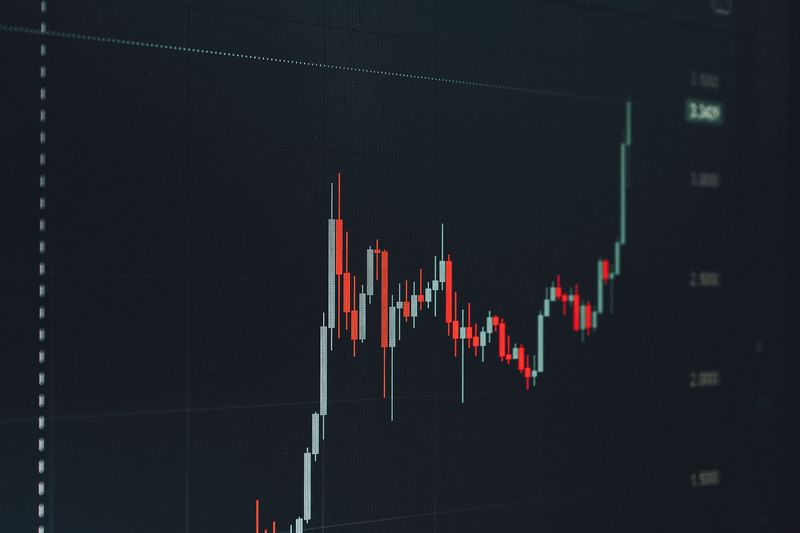
Comparisons of exchange-traded funds usually pick a winner. This one picks the circumstances, which is more useful.
The difference in one place
- You deal at a market price, not a once-daily calculated value.
- The spread between buying and selling prices is a real cost.
- Authorised participants keep the price close to the underlying value.
Continuous pricing
An exchange-traded fund is bought and sold on an exchange throughout the trading day, at whatever price is quoted at that moment. That contrasts with a conventional open-ended fund, where every order placed during the day is executed at one calculated valuation point. Continuous pricing means the value you receive depends on when in the day you dealt, which introduces a timing element that was previously absent.
For a long-term holder the timing effect is trivial, and for someone dealing frequently it is not. It also means you can see the price before committing, which some investors value and which occasionally encourages more trading than intended.
The spread is a cost
Every exchange-quoted instrument has a price to buy and a slightly lower price to sell, and the gap between them is a cost you pay immediately. On heavily traded funds tracking large, liquid markets, that gap is typically very narrow and easy to overlook.
On funds tracking smaller or less liquid markets it can be considerably wider, and it widens further during volatile periods. The spread is not disclosed as a charge because it is a market outcome rather than a fee, but it reduces your return identically. Anyone making small, frequent purchases should compare the spread and any dealing commission against the amount being invested.
How the price stays anchored
Large institutions known as authorised participants can create new units by delivering the underlying holdings, or redeem units in exchange for them. If the market price drifts above the value of the holdings, creating units is profitable, and that activity pushes the price back down.
If it drifts below, redeeming units is profitable, which pushes the price back up towards the underlying value. This mechanism is why exchange-traded funds generally trade close to their underlying value, unlike closed-ended vehicles. It works well when the underlying market is open and liquid, and less reliably when the underlying market is closed or under stress.
Physical and synthetic replication
A physically replicating fund holds the actual securities, either all of them or a representative sample designed to track closely. A synthetic fund instead enters an agreement with a counterparty that pays the index return, which introduces exposure to that counterparty. Synthetic structures can track certain markets more cheaply or reach markets that are difficult to hold directly.
Over a full year, the trade-off is a different kind of risk, usually mitigated by collateral arrangements that are disclosed in the documentation.
Neither approach is inherently superior, but they are not equivalent, and the difference is stated rather than hidden.
Dealing sensibly
Placing orders shortly after an exchange opens or shortly before it closes tends to encounter wider spreads than the middle of the session. Where a fund holds assets traded in another time zone, the pricing during your session relies on estimates rather than live prices. A limit order specifies the worst price you will accept, which protects against dealing at an unrepresentative quote.
For most households, these are mechanical considerations rather than a strategy, and they matter more for larger single transactions than for regular small ones. Regular monthly investing into exchange-traded funds can incur repeated dealing costs, which is worth checking on your platform.
This is general information, not advice about your particular position.
What it does not change
The structure does not alter what the fund holds, so an exchange-traded index fund carries the same market risk as any other index fund. It does not reduce the ongoing charge automatically, although competition among such funds has pushed charges down substantially over time. Nor does it make the underlying market more liquid; it makes your access to that market more continuous.
The visible daily price can encourage trading, and trading has costs, which is the main behavioural hazard of the structure. This describes how the instrument works and is not a recommendation to buy or hold any fund.
Side by side
| Consideration | What it means in practice |
|---|---|
| Continuous pricing | You deal at a market price, not a once-daily calculated value. |
| The spread is a cost | The spread between buying and selling prices is a real cost. |
| How the price stays anchored | Authorised participants keep the price close to the underlying value. |
The takeaway
You are buying the same market through a different door. The door charges a spread, and it is open all day.
Costs compound as reliably as returns do, and in the same direction.
Questions readers ask
Is an exchange-traded fund cheaper than a conventional fund?
Often the ongoing charge is lower, but you also pay a spread and possibly dealing commission. For small regular purchases those can outweigh the difference.
Why does the price sometimes differ from the underlying value?
It usually stays close because large institutions can create or redeem units for profit when it drifts. Gaps are wider when the underlying market is closed or stressed.


