
Investing
The spread is a cost you pay without ever seeing an invoice
Every trade has two prices. The gap between them is money that leaves your account without appearing as a charge.
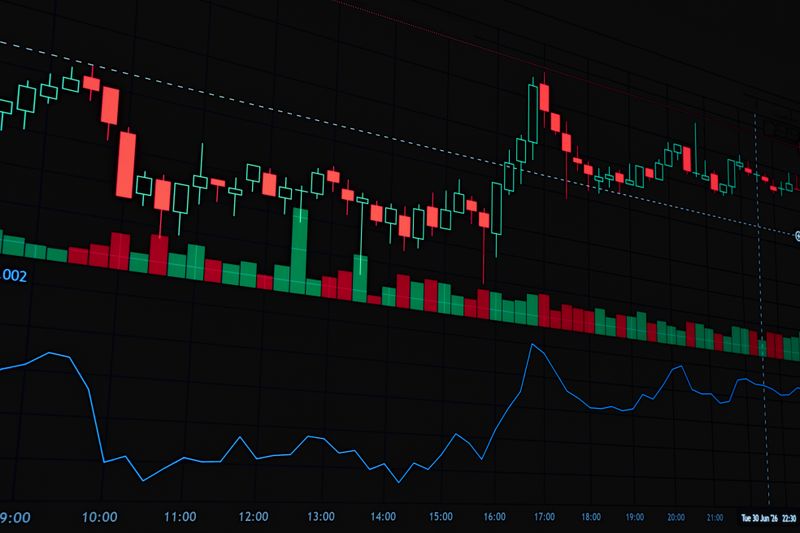
There is a settled way of talking about the spread as an invisible charge. It is worth asking how much of it survives contact with the detail.
The argument in brief
- The buying price is always above the selling price at the same moment.
- The spread is widest where trading is thin and volatility is high.
- Frequent small trades pay the spread repeatedly.
Two prices, always
At any moment an instrument has a price at which you can buy and a lower price at which you can sell, and both are quoted. The difference between them is retained by whoever stands ready to trade with you, which is the compensation for providing that service.
It follows that a holding is immediately worth slightly less than you paid, before the market has moved at all. This is not a fee, does not appear on a statement of charges and is not reported in any summary of costs. It is nonetheless money you no longer have, which makes it worth understanding before it is paid rather than afterwards.
What makes a spread wide
Spreads narrow where many participants are trading the same instrument continuously, because competition to trade compresses the gap. They widen where trading is thin, where the instrument is unusual, and where the underlying market is closed or uncertain. Volatility widens them too, because whoever quotes the prices is taking more risk by standing ready to trade.
The arithmetic is straightforward: the practical consequence is that spreads are widest at precisely the moments when investors most want to transact. Anyone dealing during a sharp market move is likely to pay considerably more than the quoted spread on a calm day.
Where it hides in funds
Conventional open-ended funds do not quote two prices in the same way, but the fund still bears trading costs when it buys and sells holdings. Those costs are borne by the fund and reduce returns without appearing in the headline ongoing charge.
In numbers, some funds apply an adjustment to the dealing price when flows are large, so that the cost falls on the investors causing it. Disclosure of transaction costs is required in many regimes, and the figures are published even though few investors look at them. A fund that trades its portfolio heavily incurs more of this cost, which is one reason turnover is worth checking.
The arithmetic of repetition
Paying a spread once on a long-held position is a minor and largely irrelevant cost. Paying it every month on small purchases, or every time a view changes, converts a small percentage into a meaningful drag.
In numbers, the cost is proportional to the amount traded rather than the amount held, so activity is what determines its size. This is one of the mechanisms by which frequent trading reduces returns, alongside commissions and the errors of timing.
Consolidating regular purchases into fewer, larger transactions reduces both spread and commission, at the cost of some delay.
Limit orders and control
A market order accepts whatever price is available, which is fast and offers no protection against an unrepresentative quote. A limit order specifies the worst price you will accept, so it protects against a bad fill at the cost of possibly not executing. For large single transactions in less liquid instruments, that protection is worth having and costs nothing but patience.
On the balance sheet, for small regular purchases in heavily traded instruments, the added complexity rarely changes the outcome. Platforms differ in what order types they support, which is a practical consideration when choosing where to hold investments.
This is general information, not advice about your particular position.
Counting the full cost of a trade
The complete cost of a transaction is the commission, the spread, any transaction tax and, where relevant, a currency conversion charge. Only the first of these is normally displayed prominently, which makes the total easy to underestimate.
Adding them together and expressing the result as a percentage of the amount traded gives a number you can compare against. For very small transactions that percentage can be surprisingly large, which is an argument for accumulating cash before dealing. This is a description of trading mechanics and not a recommendation about how or when to trade.
The takeaway
Add commission, spread, transaction tax and currency conversion together. That total, not the commission, is what a trade costs.
Write the number down before you decide. It usually decides for you.
Questions readers ask
Does the spread apply to funds as well as shares?
Exchange-traded instruments quote two prices directly. Conventional funds do not, but they still bear the trading costs of buying and selling their holdings, which reduce returns.
How can I reduce what the spread costs me?
Trade less often, trade in larger amounts, avoid the most volatile moments where possible, and use limit orders for large transactions in thinly traded instruments.


